
“I will tell you the story of my exile. From my own lips.”
He smiled, but there was no humor in it.
“Hunger teaches quickly. It teaches a man what he can live without—and what he cannot.”
“We learned to take.”
“On the roads out of Zabhela, near the water crossings, we waited. If they resisted, we killed them. If they didn’t, we took from them anyway.”
He shrugged.
“We called ourselves du’iisa-i hiddii-ni.”
“Dead gazelles.”
“We knew what we were. We knew how it would end. A gazelle runs until the crocodile takes it. That was us.”
“Our lives were a short, hungry walk to the grave. So what did it matter?”
“We came from the places the Chaga do not speak of. The places where nothing grows but need.”
“We took from caravans. From foreigners. From anyone who passed with more than we had.”
“For our wives. Our children.”
A small grin.
“And sometimes a little more.”
“Coins. Jewels. Things that shine. We hid them in caves to the northeast. Near Napata. The rest we carried back—food, tools, clothing. The women divided it.”
“That was our life.”
“Until one day fortune and misfortune found me at the same time.”
He looked off, remembering.
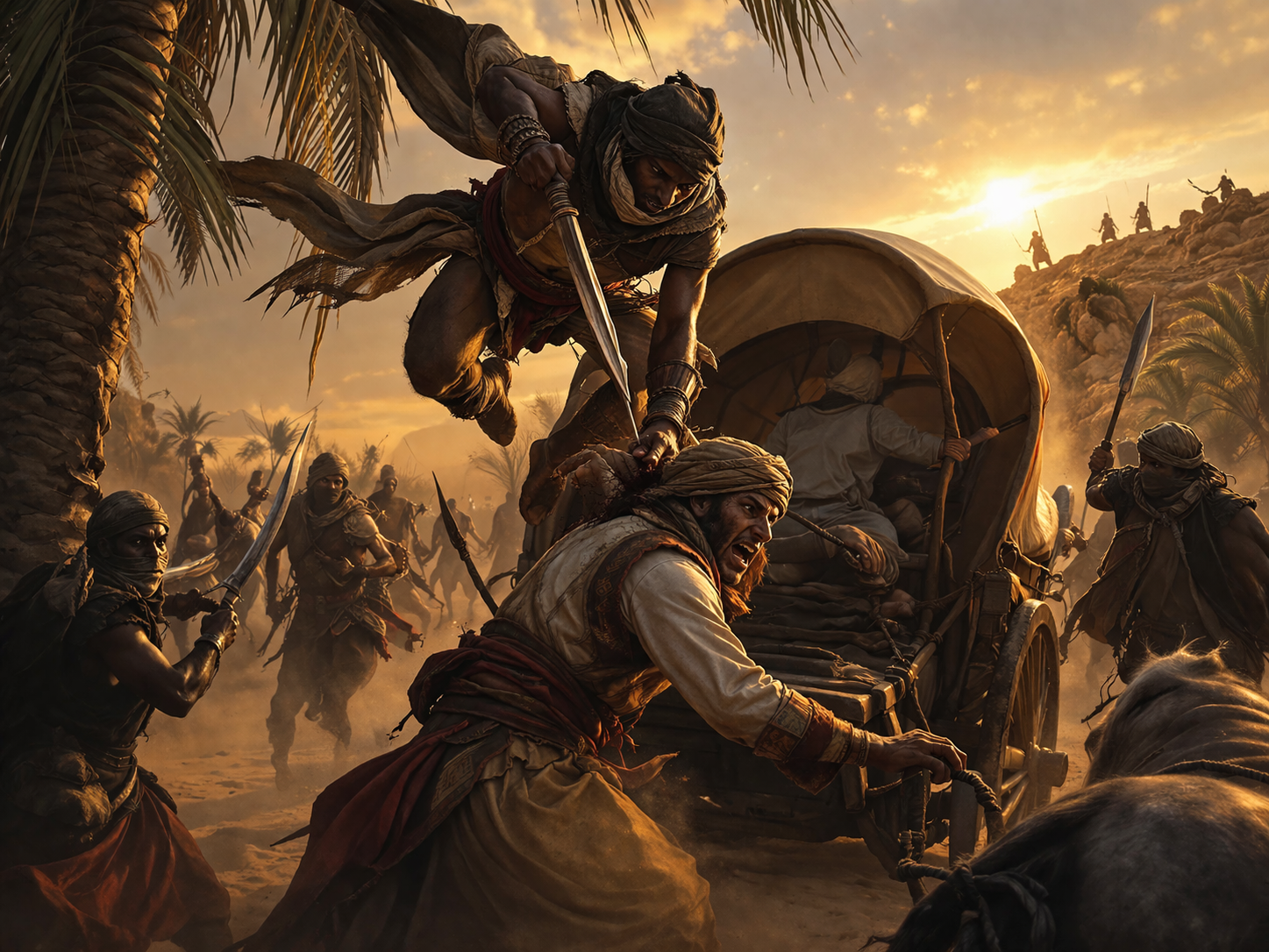
“I dropped from a palm and drove my blade through the driver. My brothers came in from the rear. We took the wagon. Killed the Chaga. Broke the foreigners.”
A pause.
“Then the guard rose from the ridge.”
“They had been waiting.”
“My brothers were swallowed that day.”
Another pause.
“I was not.”
A faint smile.
“Not killed.”
He tapped the ground.
“Brought here.”
 kneel before Zod